Lion’s Mane Mushroom
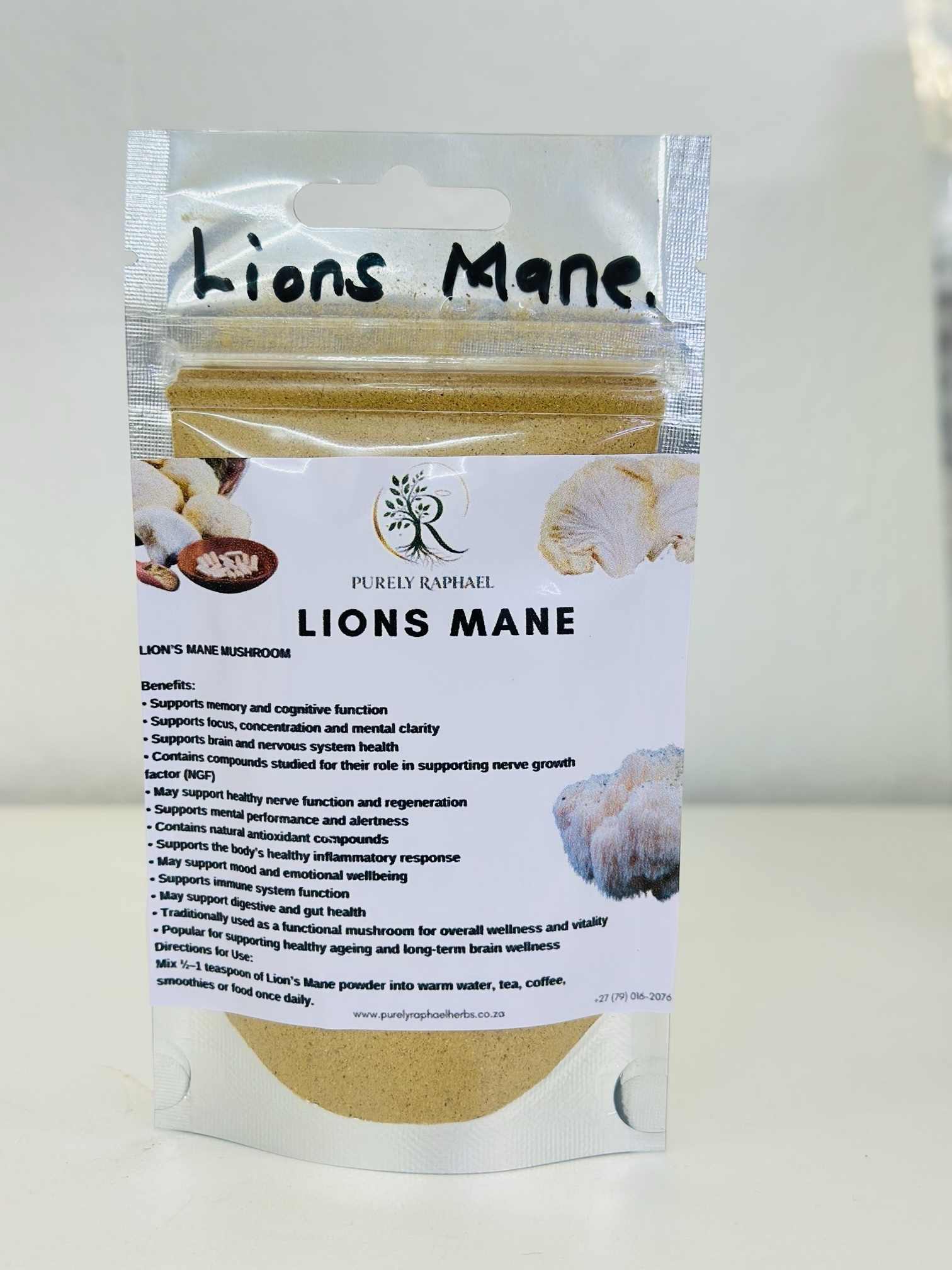
Lion’s Mane Mushroom (Hericium erinaceus) is an edible functional mushroom recognised for its distinctive appearance and growing scientific interest in brain, nervous-system, cognitive and general wellness support.
Traditionally used in East Asian food and herbal practices, Lion’s Mane contains several bioactive compounds, including β-glucans, polysaccharides, hericenones and erinacines. The exact concentration of these compounds depends heavily on whether the product is made from the fruiting body, mycelium, or a concentrated extract.
Why Lion’s Mane?
One of the most interesting areas of Lion’s Mane research is its relationship with nerve growth factor (NGF) and other neurotrophic factors. Laboratory research suggests that compounds found in Lion’s Mane can stimulate pathways involved in neuronal growth, maintenance and protection.
Lion’s Mane is traditionally and scientifically investigated for:
Brain & cognitive wellness
May support normal cognitive function, memory, concentration and mental clarity.
Nervous-system support
Its erinacines and hericenones have been investigated for their effects on neurotrophic pathways, particularly NGF.
Mental performance
Preliminary human research suggests possible benefits for aspects of cognitive performance, although results are not yet conclusive.
Mood & stress support
Small human studies have reported potential improvements in measures of mood, anxiety and subjective stress, but this evidence is preliminary and Lion’s Mane should not be presented as a treatment for depression or anxiety.
Antioxidant support
Lion’s Mane contains compounds with antioxidant activity, including polysaccharides and ergothioneine.
Healthy inflammatory response
Laboratory and animal research suggests anti-inflammatory activity, although the clinical significance in humans remains uncertain.
Gut wellness
Emerging research is investigating Lion’s Mane’s effects on gut microbiota and the gut-brain axis. This is an interesting area of research, but it is not yet strong enough to make disease-treatment claims.
Healthy ageing
Because of its potential effects on cognitive function, antioxidant activity and neuronal pathways, Lion’s Mane is being investigated as part of healthy ageing research. It should not, however, be marketed as preventing or treating dementia or Alzheimer’s disease.
What makes Lion’s Mane particularly interesting?
The compounds hericenones and erinacines are among the most studied constituents.
Hericenones are primarily associated with the fruiting body, while erinacines are particularly associated with the mycelium. Research has found that several of these compounds can stimulate NGF-related pathways in laboratory models.
How to Use
For your Lion’s Mane powder, you can state:
Suggested use:
Mix ½–1 teaspoon daily into warm water, tea, coffee, smoothies, porridge or food.
Start with a smaller amount if you have never used Lion’s Mane before.


Reviews
There are no reviews yet.